Salt water and chlorine pools both use chlorine to sanitize, so the real decision comes down to upfront cost, upkeep, and how Arizona’s heat and hard water affect each system differently. Maybe you’re building new, converting an existing pool, or you just bought a house and inherited a system you don’t fully understand. The trouble is that most guides comparing the two are written for mild climates, not for 115-degree summers and water hard enough to leave rings around your kettle. It’s the most common question we get, and the honest answer is that neither one wins outright. In Arizona, our heat and hard water tip the scales in ways they wouldn’t somewhere cooler.
Key Takeaways
- Salt water pools still use chlorine, generated on-site by a salt cell instead of added by hand.
- Salt systems cost more to install and the cell needs replacing every 3 to 7 years, but chemical costs run lower.
- Chlorine pools are cheaper to install and repair, with simpler equipment and more direct control during heat spikes or after monsoons.
- Arizona’s hard water builds up on salt cells faster than in milder climates, adding an extra maintenance consideration.
- Whichever system you choose, consistent maintenance matters more to water quality than the sanitizing method itself.
Here’s what actually matters for your decision.
First, Clear Up the Big Myth
A salt water pool is a chlorine pool. Both sanitize with chlorine.
The only difference is where the chlorine comes from. A traditional pool needs you to add it – tablets, liquid, or granular. A salt water pool makes its own: a device called a salt cell converts dissolved salt into chlorine as the water passes through.
So when people picture salt water as a chlorine-free ocean dip, that’s not it. It’s a pool that produces chlorine on its own instead of asking you to pour it in.
Salt Water Pools
What people like:
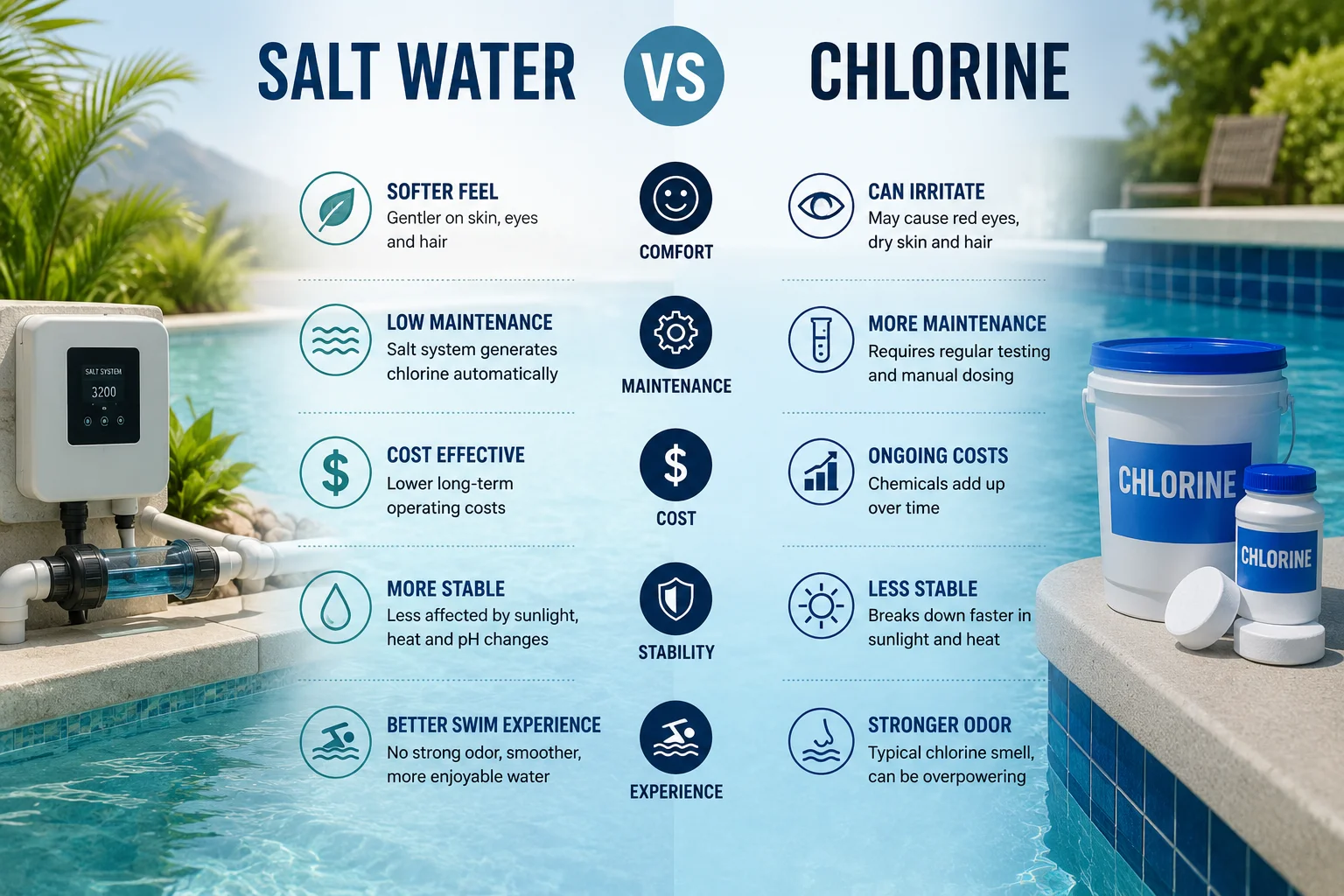
- The water feels softer and is easier on skin, eyes, and hair
- The salt cell sanitizes day to day, so you’re not handling chlorine as often
- No strong chlorine smell when the water is balanced
- Salt is cheap compared to buying chlorine all season
The trade-offs:
- The system costs more to install than a standard chlorine setup
- The salt cell wears out. Plan on replacing it every 3 to 7 years, and it’s a few hundred dollars each time
- Salt is corrosive over time to some equipment, fixtures, and natural stone, and Arizona equipment already takes a beating from the heat
- It still needs regular testing and balancing. "Makes its own chlorine" is not "takes care of itself"
Chlorine Pools
What people like:
- Cheaper to install, with no salt generator to buy
- Simpler equipment means fewer expensive parts that can fail
- Repairs generally cost less
- You get direct control, which helps during a July heat spike or after a monsoon dumps debris in the water
The trade-offs:
- More hands-on. You’re adding chlorine and checking levels often, especially in summer when it burns off fast
- You have to buy, store, and handle chlorine
- The water can feel harsher on skin and hair, and smell stronger if the chemistry drifts
How Does Arizona’s Climate Change the Salt vs. Chlorine Decision?
| Factor | Salt Water Pools in Arizona | Chlorine Pools in Arizona |
|---|---|---|
| Hard water impact | Calcium scales the salt cell faster, shortening its lifespan | No cell to scale, but calcium still affects surfaces and equipment |
| Heat impact | Salt cell works overtime to keep up with chlorine demand | Chlorine burns off quickly, requiring more frequent additions |
| Evaporation impact | Concentrates minerals against the cell and equipment | Concentrates minerals but affects a simpler system |
This is the part a national guide won’t tell you.
Hard water and salt cells don’t mix well. Our water is loaded with calcium. In a salt pool, that calcium cakes onto the salt cell faster than it would in softer water, so the cell needs cleaning more often to keep producing chlorine. Skip that upkeep and the cell dies early – and you’re buying a new one sooner than you should.
The heat pushes both systems hard. Intense sun burns through chlorine fast no matter which type you have. A salt system has to work overtime in July and August to keep up, and one that’s undersized for the pool will fall behind right when you’re swimming most.
Evaporation concentrates everything. Water leaves fast in the desert and minerals stay behind. Both pool types feel this, but a salt pool gives you one more level to watch.
So Which One Should You Pick?
Lean salt water if you want softer water, you’d rather not handle chlorine, you’re fine paying more up front, and you’ll keep up with cleaning the cell.
Lean chlorine if you want lower install and repair costs, simpler equipment, and direct control – or you’re hiring a service to handle the chemicals anyway, which cancels out the main downside.
The Part That Matters More Than the Type
Whichever you choose, the pool is only as good as the care behind it. A neglected salt pool ends up with a calcium-caked cell and chlorine it can’t hold. A neglected chlorine pool turns green just as fast. The system doesn’t keep your water clear – consistent, knowledgeable maintenance does.
If you’ve noticed your water looking cloudy or off-balance already, our 7 signs your pool needs professional cleaning guide can help you check. Our pool maintenance service covers both salt wate
Call or text us at 602-492-6753 or **request a free estimate online**.
Frequently Asked Questions
Is a salt water pool really chlorine-free? No. A salt water pool still sanitizes with chlorine, it just generates it on-site using a salt cell instead of you adding tablets or liquid chlorine by hand. The water can feel softer, but it is not chemical-free.
Which is cheaper in Arizona, salt water or chlorine? Chlorine pools cost less to install since there is no salt generator to buy, and repairs tend to be cheaper too. Salt systems cost more upfront and the salt cell typically needs replacing every 3 to 7 years, but you spend less on chemicals season to season.
Does Arizona’s hard water affect salt water pools more than chlorine pools? Yes. Calcium in Arizona’s hard water builds up on salt cells faster than in milder climates, shortening their lifespan if the water isn’t monitored closely. Chlorine pools face hard water buildup too, but it doesn’t damage a specific piece of equipment the way it does a salt cell.
How often do I need to maintain a salt water pool versus a chlorine pool? Salt pools still need regular testing and balancing even though the cell generates chlorine automatically. Chlorine pools require more hands-on attention, especially in summer when intense sun burns off chlorine quickly.
Can a pool service handle both salt water and chlorine pools? Yes. Routine maintenance covers testing, balancing, and equipment checks for either system, so switching pool types doesn’t mean switching how your pool gets cared for.