
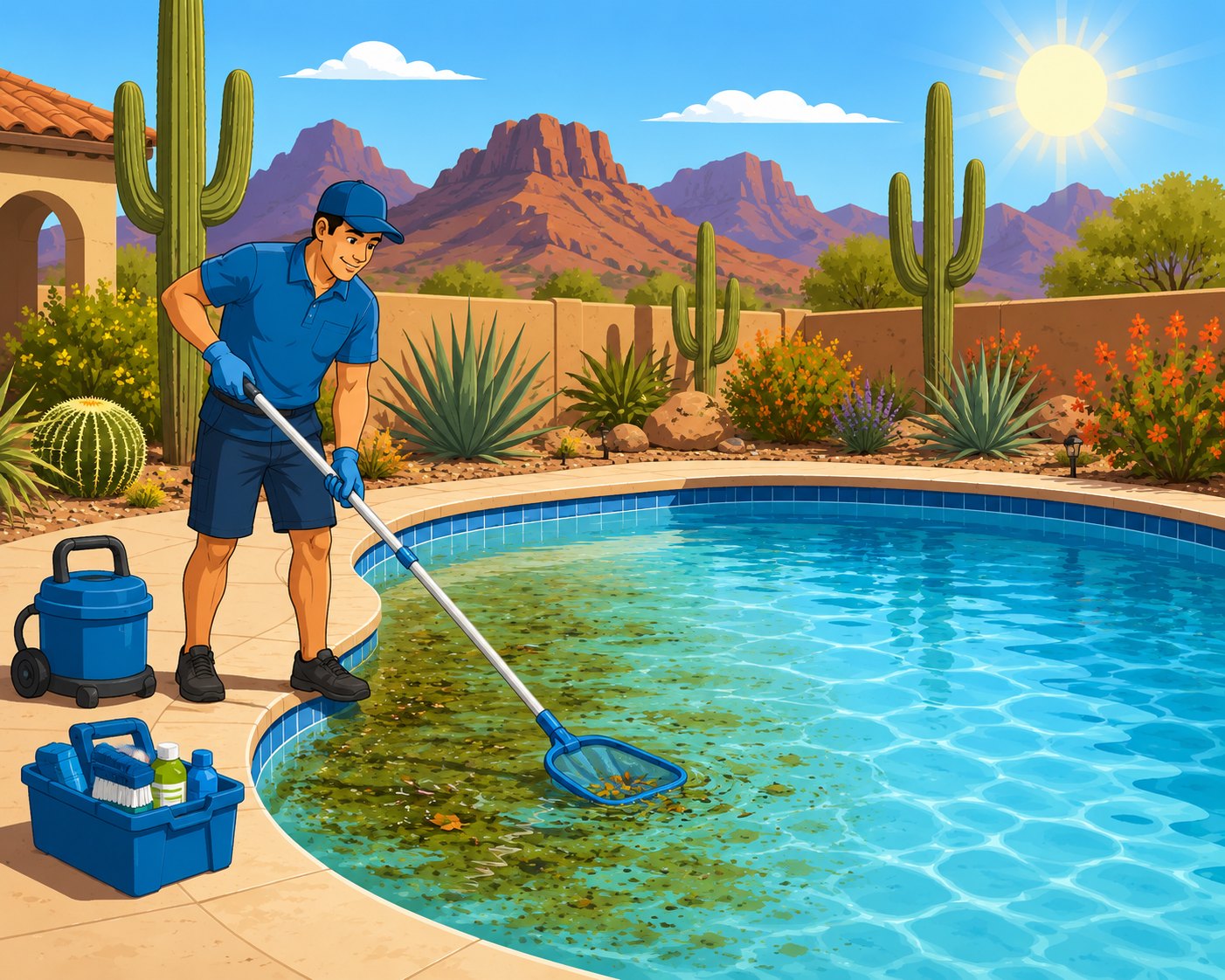
Don’t let Arizona’s heat and dust ruin your swim season. Discover the 7 signs your pool needs professional cleaning in Arizona to prevent algae and equipment damage.
Key Takeaways
- Arizona pools require specialized care due to extreme UV exposure that can deplete chlorine in under two hours.
- Physical signs like cloudy water, slippery walls, and calcium deposits indicate that DIY maintenance is no longer sufficient.
- Professional service in the East Valley typically saves homeowners 3-5 hours of labor per week while extending the lifespan of expensive pumps and filters.
- Consistent chemical balancing is essential to prevent rapid algae growth in 100°F+ temperatures.
Maintaining a pristine swimming environment in the East Valley requires more than a simple skimmer, especially as high UV exposure and 100°F+ temperatures accelerate chemical depletion. In cities like Queen Creek and Chandler, extreme summer temperatures and frequent dust storms constantly challenge water chemistry. While many homeowners attempt DIY maintenance, hidden imbalances often lead to costly equipment failure or persistent algae blooms. This guide identifies the seven critical signs that your pool requires professional intervention to remain safe and crystal clear throughout the Arizona swim season.
Arizona pool maintenance is uniquely challenged by high UV levels and hard water, requiring professional intervention when chemical stability or equipment performance falters. Homeowners in the East Valley can prevent costly repairs by identifying early warning signs like cloudy water, rapid chlorine depletion, and slimy surfaces before pool season peaks.
Key Takeaways
Arizona pools face unique challenges due to hard water and high UV exposure, which can deplete chlorine in under two hours. Identifying early warning signs like slippery walls or cloudy water can prevent expensive pump repairs and hazardous algae growth. Professional service in the East Valley typically saves homeowners 3 to 5 hours of labor per week while ensuring consistent chemical balance.
Cloudy Water & Algae: Persistent haziness or slippery walls indicate chemical imbalances often caused by Arizona’s 100°F+ temperatures.
Equipment Strain: Loud noises or weak circulation suggest clogged filters that can lead to expensive pump failures if not serviced.
Chemical Instability: Rapid chlorine depletion from high UV exposure requires professional-grade stabilization to maintain safety.
Time Savings: Converting DIY maintenance to professional service typically recovers 3-5 hours of labor per week for Arizona homeowners.
If you own a pool in Queen Creek, Chandler, Mesa, or Gilbert, Arizona, your maintenance needs are defined by the specific environmental demands of the Sonoran Desert.
A lot of homeowners try to stay ahead of it themselves, but a pool eventually starts showing signs that it needs professional attention. The challenge is that many of those warning signs start small. By the time the water turns green or equipment fails, the problem has often been building for weeks.
Here are some of the most common signs your pool may need professional cleaning and maintenance.
Why is my Arizona pool water cloudy?
Your Arizona pool water is likely cloudy because of high calcium hardness (often exceeding 400 ppm), inefficient filtration during dust storms, or rapid chlorine depletion caused by extreme UV exposure. improper filtration, low sanitizer levels, or high calcium hardness of over 400 ppm, which are exacerbated by desert dust and high evaporation rates.
- In Arizona, this happens often because pools deal with:
- High heat that burns through chlorine faster
- Dust and debris from wind and monsoon season
- Hard water and calcium buildup
- Increased pool usage during summer
A pool should look clear enough to easily see the bottom at all times. If it constantly looks dull or cloudy, there’s usually a deeper maintenance issue that needs to be corrected.
How do you know if algae is starting to form in an Arizona pool?
Algae rarely appears overnight. It typically starts as small green spots, slippery walls, or discoloration near steps and corners before spreading throughout the pool.
Many homeowners try to shock the pool repeatedly, but algae often comes back when the underlying problem isn’t addressed. Poor circulation, inconsistent brushing, and improper chemical levels are common causes.
Arizona heat creates the perfect environment for algae growth, which often requires specialized green pool cleanup to fully remediate., which is why routine professional maintenance can make a major difference in preventing larger cleanup issues later.
Why do my pool chemicals constantly feel unbalanced in Arizona?
If you feel like you’re constantly adding chlorine, adjusting pH, or buying chemicals without ever getting stable results, your pool may need more consistent maintenance.
- Arizona pools are especially difficult to balance because:
- Water evaporates quickly
- High UV exposure and heat cause chemicals to burn off faster than expected
- UV exposure breaks down chlorine rapidly
- Hard water affects calcium levels
- Dust and debris contaminate water chemistry
Professional pool service is a specialized process of chemical balancing in high-UV, high-temperature desert climates. It’s about maintaining proper balance consistently so small issues do not turn into larger problems.
What are the signs of pool equipment failure in the desert?
Your filtration and circulation system are critical to keeping your pool healthy. When a pool becomes dirty or poorly maintained, the equipment has to work much harder to compensate.
Signs of stress can include:
- Weak circulation
- Dirty or clogged filters
- Loud pump noises
- Poor skimming performance
- Increased debris buildup
Ignoring these issues can shorten the lifespan of pool equipment repair over time.
When pool pumps, filters, and heaters break down, owners often don’t know who to call for reliable desert-specific repairs that can withstand 110°F+ operating environments.
How do Arizona monsoon storms affect pool cleanliness?
According to established regional climate research from 2024, Arizona monsoon storms can deposit significant amounts of dust and biological material into pools in a single afternoon, overwhelming standard filtration systems.
If you constantly notice:
- Dirt collecting at the bottom
- Leaves piling up
- Sand or dust buildup
- Bugs and debris floating daily
…it may be time for a more consistent maintenance schedule.
Slimy Walls or Surfaces
Even if the water looks clear, pool walls in Mesa and Gilbert should never feel slippery or slimy. That texture is often an early warning sign of algae or bacteria buildup.
A properly maintained pool should feel clean and smooth throughout.
When should I switch to professional pool cleaning in Queen Creek or Gilbert?
This is one of the biggest signs homeowners overlook.
If every weekend turns into:
- Testing water
- Cleaning baskets
- Vacuuming debris
- Brushing walls
- Running to the pool store
…the pool is no longer something you enjoy. It has become another responsibility competing for your time.
Does hard water affect how often I need pool cleaning in Arizona? Yes, the high calcium hardness common in the East Valley requires more frequent chemical adjustments and professional monitoring to prevent permanent mineral scaling on tiles and equipment. Most Queen Creek and Gilbert homeowners benefit from weekly service to manage these desert-specific water chemistry shifts.
Professional pool service helps remove that stress while keeping your water clean, balanced, and swim-ready year-round.
Why is pool maintenance more difficult in the Arizona desert?
Arizona’s climate is tough on pools. Extreme temperatures, constant sunlight, hard water, and monsoon conditions all create additional wear on both water quality and equipment.
Consistent maintenance helps:
- Prevent algae growth
- Extend equipment life
- Improve water clarity
- Reduce chemical waste
- Avoid expensive repairs
Small maintenance issues become much more expensive when ignored for too long.
For a clear assessment of your system, you can request a free estimate to identify potential issues before they become emergencies.
Professional Pool Cleaning: Serving Queen Creek, Chandler, Mesa & Gilbert Arizona
Proposing no change to link but validating against sitemap; would suggest additional internal link to free estimate to drive conversion.
From weekly pool service and chemical balancing to algae prevention and equipment inspections, our goal is simple: keep your pool healthy so you can actually enjoy it.
As a locally owned pool cleaning service native to Arizona with 20+ years of experience understanding the challenges of hard water, extreme heat, and desert pool conditions, we have spent over 20 years mastering the high-UV, high-calcium chemistry required to combat the state’s notorious hard water.
How often should I clean my pool filter in Arizona? In the East Valley, you should clean or backwash your filter every 4-6 weeks, or more frequently during monsoon season when dust and debris levels spike. Regular filter maintenance prevents equipment strain and keeps water clear in the 100°F+ heat.
Frequently Asked Questions
How often should I clean my pool filter in Arizona? In the East Valley, you should clean or backwash your filter every 4-6 weeks, or more frequently during monsoon season. Frequent cleaning prevents pressure buildup and protects your pump from the fine desert dust that penetrates standard filtration systems.
Does hard water affect how often I need pool cleaning in Arizona? Yes, the high calcium hardness common in Queen Creek and Mesa requires more frequent chemical testing to prevent scale deposits on tiles. Keeping your water professionally balanced helps delay the need for expensive acid washes or full pool drains due to mineral buildup.
When and why Arizona pools need a drain and acid wash
If calcium levels become unmanageable despite regular maintenance, a professional drain and acid wash may be necessary to restore your pool’s surface and water chemistry—a common requirement in the East Valley due to our unique mineral density.
Can high heat cause my pool to turn green overnight? In temperatures exceeding 100°F, chlorine stabilizes poorly and algae can bloom within 24 hours if levels drop. Professional-grade stabilizers and weekly monitoring are necessary to prevent green pool outbreaks during the peak Arizona summer.