
June Pool Care in Arizona: How to Keep Your Pool Crystal Clear During Peak Swim Season
Our specialized pool care routines are designed specifically for the unique environment of Queen Creek, Chandler, Mesa, and Gilbert, Arizona.
Key Takeaways
- Test pool chemistry twice weekly to combat rapid chlorine burn-off caused by Arizona’s 105°F+ heat.
- Increase pump runtime to 10-14 hours daily to ensure proper circulation and debris removal.
- Maintain water levels above the skimmer to prevent air intake and equipment damage from evaporation.
- Brush pool surfaces twice a week to remove biofilm and prevent summer algae blooms.
June marks the official start of pool season across the Valley. With temperatures regularly climbing above 105°F, your pool goes from a backyard feature to the most-used part of your home. Unfortunately, it’s also the month when algae, cloudy water, and equipment issues become most common.
A little preventative maintenance now can save hundreds in repairs and chemical treatments later.
Why is June maintenance difficult for Arizona pools?
Arizona’s extreme heat accelerates nearly every chemical reaction in your pool, making chemical balancing in high-UV, high-temperature desert climates a much more complex task than in other regions.
During June, homeowners commonly experience:
- Faster chlorine burn-off from intense UV exposure
- Increased evaporation requiring more frequent water top-offs
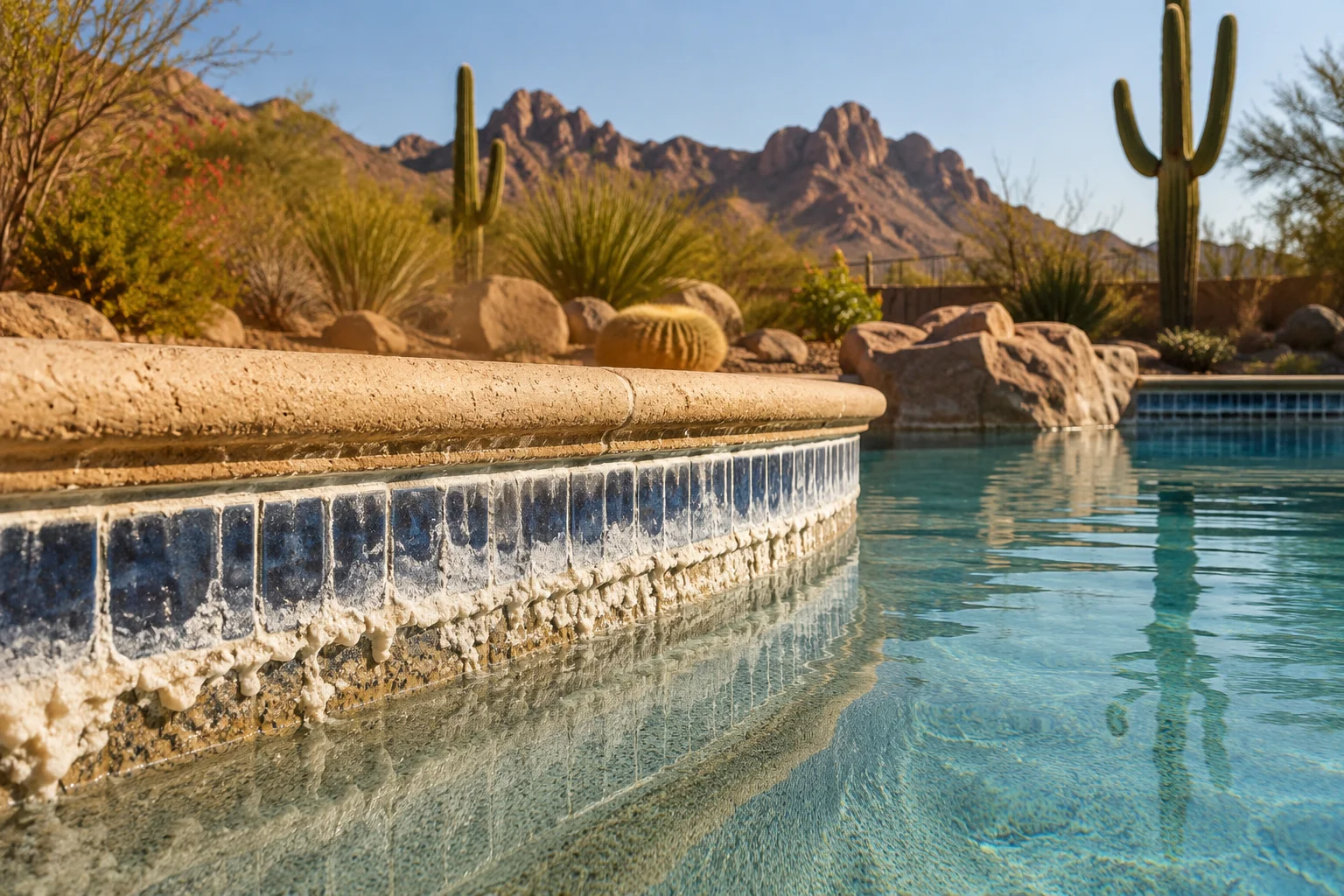
- Rising calcium hardness from replacement water, which causes visible calcium and mineral buildup on tile and equipment.
- Algae growth after monsoon dust or heavy pool usage
- Higher demand on pumps and filtration systems
Even pools that looked perfect in May can quickly develop problems if maintenance routines don’t adjust for the summer heat. Be aware of the 7 signs your pool needs professional cleaning in Arizona before seasonal issues escalate.
Increase Your Water Testing
Summer isn’t the time to guess.
Your pool water should be tested at least twice each week during June. Keeping your chemistry balanced helps prevent algae, scaling, cloudy water, and unnecessary equipment wear.
Pay close attention to:
- Free Chlorine
- pH
- Total Alkalinity
- Calcium Hardness
- Cyanuric Acid (Stabilizer)
Small adjustments are much easier and less expensive than correcting major imbalances.
Don’t Skip Brushing
Many homeowners vacuum regularly but forget to brush.
Brushing walls, steps, corners, and behind ladders removes biofilm before algae has a chance to grow. During June, brushing at least twice a week is recommended, especially if your pool receives full afternoon sun.
Run Your Equipment Longer
As temperatures rise, so should your pump runtime. During the Arizona summer, you should run your pool pump for at least 10 to 14 hours daily to ensure the entire volume of water is filtered and chemicals are distributed evenly.
Many Arizona pools benefit from running the filtration system between 10 and 14 hours per day during June, depending on pool size, equipment efficiency, and usage.
A properly circulating pool distributes chemicals evenly while removing debris before it becomes a problem.
Watch Your Water Level
Arizona pools lose significant water through evaporation.
If the water level falls below the skimmer opening:
- Pump performance decreases
- Air can enter the system
- Equipment damage becomes more likely
Check water levels every few days during peak heat.
Empty Baskets Frequently
Leaves, pollen, dust, and insects accumulate much faster in June.
Keeping skimmer and pump baskets clean improves circulation and reduces strain on your filtration system. It also helps maintain proper water flow during heavy swim season.
Prepare for Monsoon Season
Although monsoon storms often arrive later in the summer, June is the perfect time to prepare.
Dust storms introduce:
- Dirt
- Organic debris
- Phosphates
- Fine particles that quickly cloud water
Having your filtration system operating efficiently before storm season helps minimize cleanup afterward.
Let the Professionals Handle It
Summer pool care requires more than simply adding chlorine each week.
Professional service includes:
- Water chemistry balancing
- Equipment inspections
- Filter monitoring
- Early detection of leaks or failing components
- Consistent cleaning that keeps your pool swim-ready all season
Routine maintenance also helps extend the life of your pump, filter, heater, and pool surfaces.
Keep Your Pool Ready All Summer
Arizona summers are meant to be spent enjoying your pool, not fighting algae or cloudy water.
Whether you need weekly pool service, equipment inspections, or help getting your water back into balance, Valley Pool Cleaning keeps pools throughout the Valley clean, healthy, and ready for every swim.
Schedule your weekly pool service today and enjoy a crystal-clear pool all summer long.
Frequently Asked Questions
When and why do Arizona pools need a drain and acid wash? Periodic draining is necessary every 3–5 years because calcium and total dissolved solids (TDS) reach levels where chemicals no longer work effectively; an acid wash can then remove stubborn mineral stains from the plaster.
How many hours should I run my pool pump in Arizona during June? You should aim to run your pool pump between 10 and 14 hours per day. This extended runtime is necessary to keep water circulating through the filter as high temperatures increase the risk of algae growth.
How often should I test my pool water in the summer? In June, you should test your pool water at least twice per week. The extreme Arizona heat and increased swim usage can cause rapid shifts in chlorine levels and pH that require frequent monitoring to correct.
What causes high chlorine loss in June? Intense UV exposure from the Arizona sun causes rapid chlorine burn-off, often referred to as sun-stripping. Using a stabilizer (cyanuric acid) can help, but regular testing is essential to ensure your free chlorine levels remain high enough to sanitize the water.
How do I prevent my pool water from evaporating? While you cannot stop evaporation entirely in 105°F heat, checking your water level every few days is vital. Ensure the water remains at the midpoint of the skimmer opening to prevent the pump from drawing in air, which can cause equipment damage.